Social media isn’t simply good or bad for teens. What matters is how it’s used, what it replaces, and which teens are most affected.
Few topics worry parents more than the hours their teenager spends on social media. The headlines are alarming, the research is often oversimplified, and it’s genuinely hard to know how concerned to be. The honest answer is that social media is neither the villain it’s sometimes made out to be nor harmless — its effects depend heavily on the individual teen and the way it fits into their life.
The real benefits are worth acknowledging. For many adolescents, social platforms are where friendships are maintained, identities are explored, and belonging is found. Teens who feel isolated in their immediate environment — including those who are marginalized or different in some way — can find genuine community and support online. Dismissing all of it as harmful misunderstands how central these spaces are to modern adolescent life.
The concerns, though, are real. Several are well enough supported to take seriously:
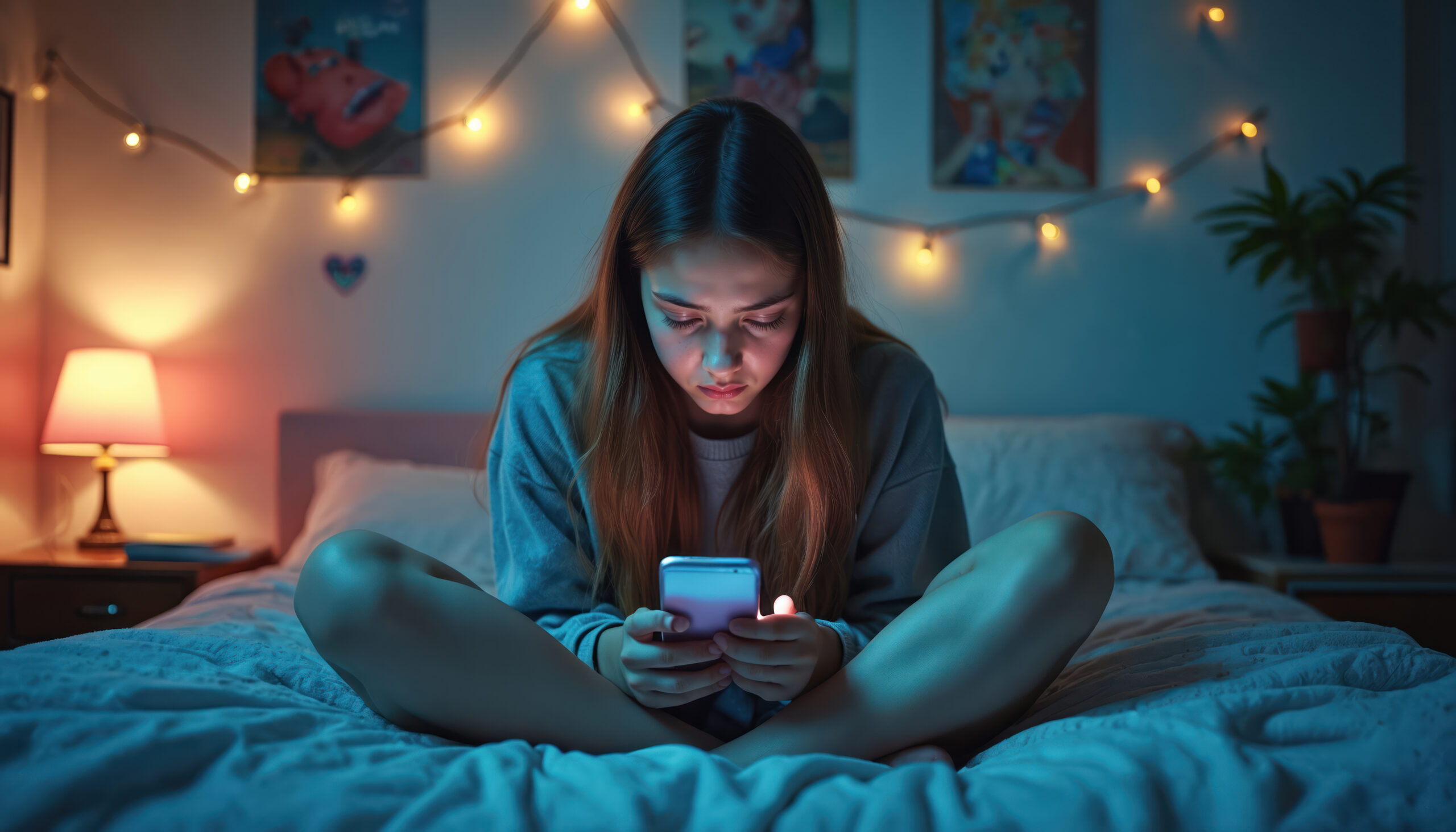
- Sleep. This may be the single most underappreciated harm. Late-night scrolling delays and fragments sleep, and poor sleep affects mood, concentration, and emotional regulation the next day. Much of what looks like a “social media problem” is really a sleep problem.
- Social comparison and self-image. Endlessly viewing curated, idealized versions of other people’s lives and bodies can erode self-esteem, particularly in adolescents already prone to anxiety or body-image concerns.
- Cyberbullying. Unlike conflicts that once ended at the school gate, online harassment can follow a teen home and continue around the clock.
- Displacement. Time online isn’t inherently the problem; it becomes one when it crowds out the things that build wellbeing — sleep, in-person friendship, physical activity, and unstructured downtime.
What the evidence actually says. It’s worth being clear-eyed here. Research consistently finds associations between heavy social media use and lower mood in some teens, but association is not the same as causation, and the effects are far from uniform. For many adolescents, the impact is small; for a vulnerable subset — those already struggling with anxiety, depression, or self-esteem — it can be significant. The teens who need the most attention are often those who use social media heavily at night, who compare themselves relentlessly, or who are being targeted by others.
What parents can do. The most effective approach isn’t surveillance — it’s connection and structure:
- Keep the conversation open and curious rather than accusatory. Teens share more when they don’t expect a lecture.
- Protect sleep first: keep devices out of the bedroom overnight, which addresses one of the clearest harms.
- Model the behavior you want; teens notice their parents’ own phone habits.
- Focus less on total hours and more on how your teen feels during and after using social media, and whether the important parts of their life are intact.
For a broader look at screens and gaming more generally, see our related article: Is My Teen’s Gaming or Screen Use a Problem?
When to seek help. If your teen shows persistent low mood, withdrawal from friends or activities, changes in sleep or appetite, a marked drop in self-esteem, or signs of being bullied, social media may be one piece of a larger picture worth evaluating. Trust what you observe over time — a lasting change, not a single bad day, is the signal that a conversation with a professional may help.
If you’re ever worried about your teen’s immediate safety — including talk of self-harm — call or text 988, or call 911 in an emergency.